

Q4 Rules Update
Hello, fellow Warlords!
We have a handful of rules updates that we want to bring to your attention. No real changes today, just a few clarifications and additions to add to a few long-ruled items. There are four in particular I’d like to bring to your attention.
As always, you can find the Warlord Rules page here.
302.7.3. If an ongoing or static effect would cause an item to lose an equip location trait after the item is equipped, but before any items are destroyed, no item with the lost equip location need be destroyed. Similarly, if an ability, keyword, ongoing effect, or static effect would allow a character to have more than one item with a particular equip location trait equipped after the item is equipped, but before any items are destroyed, that character need only destroy items until the additionally allowed equip location requirements are met.
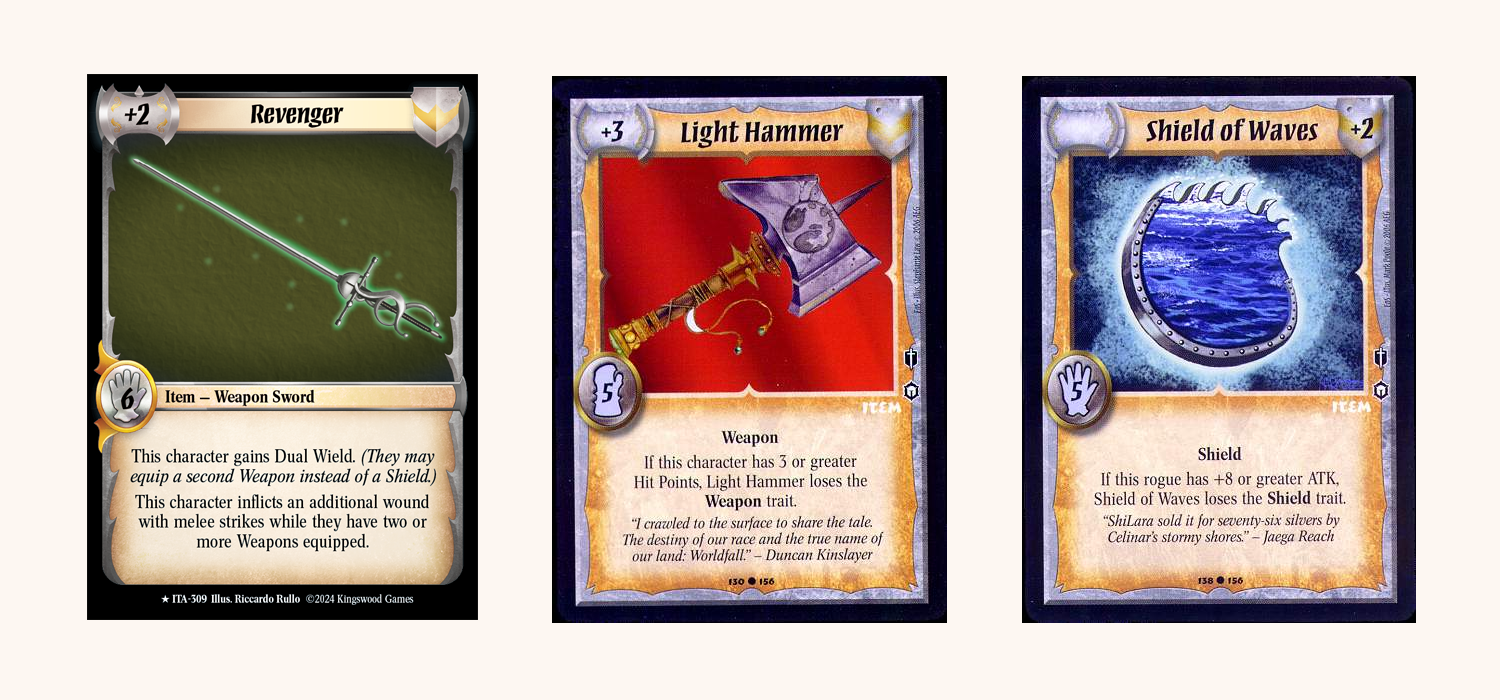
First up is an adjustment to 302.7.3. This is a more recent rule that clarifies that static text allows a character to equip an item such as Light Hammer while they already have an item equipped with the same equip location. In the example of Light Hammer, as long as they have 3 hit points the static text for Light Hammer will kick in and remove the “weapon” trait before the character would need to choose a weapon to discard. What wasn’t clarified before was that the reverse is true as well, meaning if you equip an item and gain the ability to equip another item with the same equip location via an ability or static text granted by the item, you need not discard an item of that equip location. Which is essentially a complicated way of saying that if you already have a Cutlass equipped to your Alrayn Gaunt and equip a Revenger, you can keep both weapons, because the Dual Wield keyword ability kicks in before you need to discard one of the weapons.
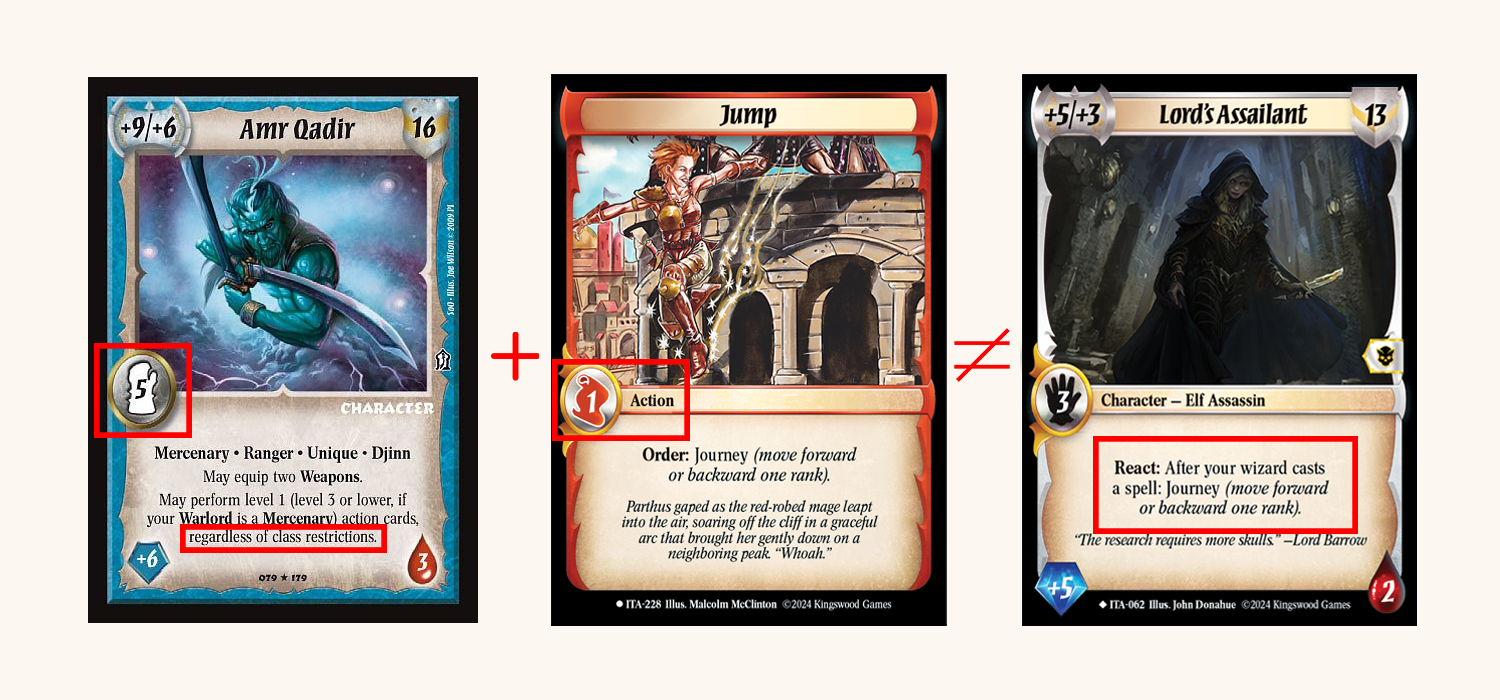
510.29. Some actions or effects allow a character to perform an action “regardless of” a particular keyword, trait, class, level, or other requirement. While performing actions in this way, the character is not considered to have the keyword, trait, class, or level that would normally be required.
The second addition I’d like to call out is 510.29. While there have been rules pertaining to characters performing actions ‘as if you were’ another class, level, etc., there has not been a rule relating to performing actions ‘regardless of ’ class, level, etc. This one isn’t particularly complicated, just a clarification that if a character such as Amr Qadir plays a wizard action made possible by their static text, they are not considered a wizard while performing it, they are simply allowed to ignore the class restriction of the action.
510.2.1. Some older cards instruct you to “do X to do Y”. This is considered a cost.
The third item is also a simple one, and honestly something I’m surprised hadn’t been added to the game rules until now. 510.2.1 was created to clarify that older card wordings directing you to do something ‘to’ do something else are considered a cost. For example, Adoramus Te instructs you to “Discard a card from your hand to give Adoramus Te +1 level until the end of the turn”. Discarding the card is a cost of performing the action, and if we were to word this card today it would be something closer to: “Order: Discard a card: Adoramus gains +1 level this turn.” This has long been the ruling for cards worded this way, so it was only natural to finally put it on paper.
509.3.3. If an action or effect instructs a character to perform a melee strike targeting a specific character, that character need not be within one rank.
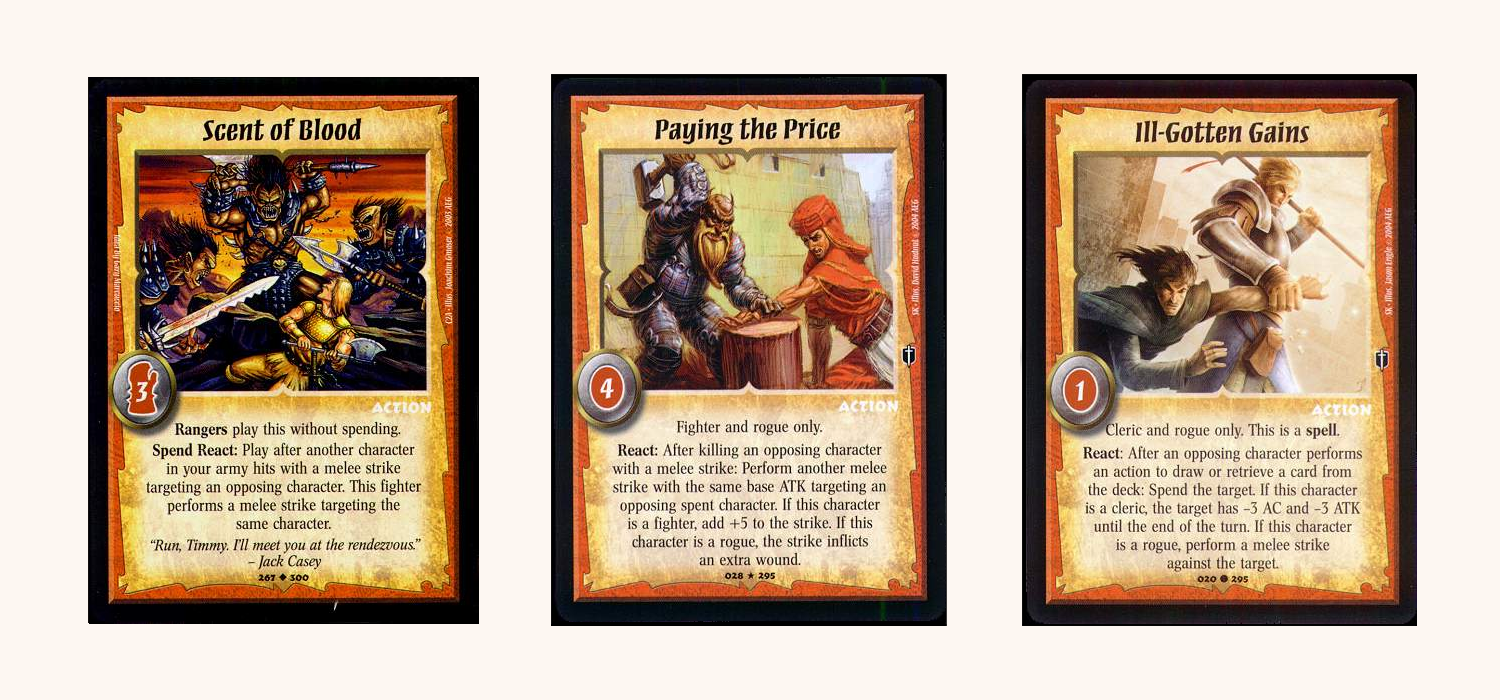
The final item I’d like to highlight is another long standing ruling that was never formally codified. 509.3.3 now exists to clarify that if a particular character is explicitly specified as a target for a melee strike, such as through the Riposte feat, or a card like Scent of Blood or Ill-Gotten Gains, they need not be within one rank of the character performing the strike. This only applies for actions with a specifically stated target, not actions that specify a particular type of target. For example, Paying the Price allows you to perform another melee strike targeting ‘a spent character’. In that case, ‘a spent character’ is not a specific character, but a further restriction on the type of character that can be targeted meaning the normal restrictions of a melee strike must still be followed.
And that sums it up for Q4 2025! A light quarter as we head into our first set release, but with a handful of solid additions nonetheless. If you’d like to view those or any of the other changes this quarter please take a look at the Comprehensive Rules changelog here. As a further reminder, if you have a rules question please reach out using the “Ask a Rules Question” link on the Rules Page.
